Clovelly
The Salt PathClovelly is a steep coastal village encountered by Ray and Moth at the end of a hungry, exhausting walk. Its cobbled street, harbour and carefully managed estate make it a destination for visitors, but for the couple the place first appears as a difficult test of whether they can find food. A young man eating a large pasty and a pink-haired worker who gives them food turn that search into an encounter with both everyday kindness and the social divisions Ray recognizes from her own upbringing.
Estate and setting
Clovelly is run as an estate: its houses are owned and rented by the estate company, which is controlled by descendants of the family that has owned it for nearly three hundred years. The village is known for a very steep cobbled street descending through picturesque cottages to the harbour. In Ray and Moth’s experience, however, this familiar visitor image is preceded by a long approach through woods and rain. The road and the Hobby Drive seem to continue around corner after corner without bringing the village into view.
The estate’s management is immediately tangible at the entrance. Ray and Moth pass a sign charging six pounds fifty each to enter and make their way down the cobbled street without paying. Below, the shop proves to be closer to a small outlet for sweets and ice cream than a place to buy provisions. When they ask about food, they are directed towards the pub or visitor centre. The contrast between the village’s picture-perfect appearance and the practical difficulty of getting a meal shapes their first impression: Clovelly is presented to visitors as a destination, while the hungry walkers need it to function as a place where they can replenish their supplies.
The approach and the search for food
The couple’s arrival follows a night in a concealed patch of field after Moth becomes exhausted on the path. They had set out hoping to reach Clovelly for supplies, but the little shop at Bucks Mills had closed shortly before they arrived. Forced to stop before completing the journey, they pitched their tent hungry and kept four digestive biscuits for breakfast. The following day, rain fell steadily through the trees as the gravel track carried them on. Hunger had already lasted a week; Ray was lightheaded and even wondered whether pheasant grain might be boiled for food.
Clovelly’s long-awaited appearance is delayed until Ray can smell cars and infer that they must be close. Once there, the couple go down to the harbour and sit in the drizzle. Their attention remains fixed on the practical question of how to eat: they consider whether the pub might provide cash back if they shared a bowl of chips. The visitor shop’s sweets and ice cream, and the direction to the pub or visitor centre, do not yet resolve that problem.
The pasty and an unexpected kindness
At the harbour, Ray sees a young man dressed in black, apparently about to start work at the bar, eating an enormous Cornish pasty. The sight lands with particular force because she is so hungry that she considers catching the pastry flakes falling to the ground. She asks where he got it, since the shop had nothing. He looks taken aback at being addressed by a middle-aged, smelly tramp, and pauses to consider the couple while finishing his food. The moment lays bare the distance between their urgent need and the ordinary meal he is able to eat.
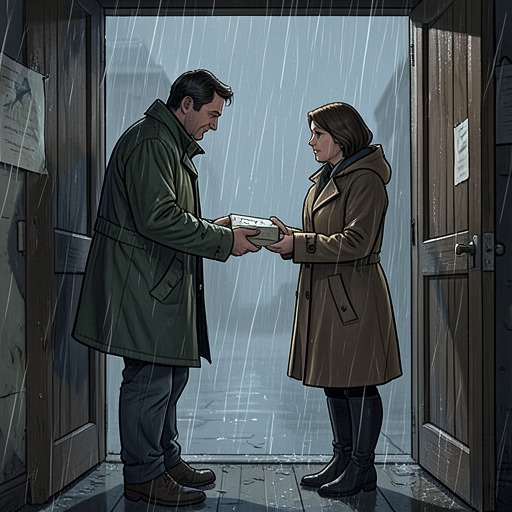
Later, as Ray and Moth wait for their clothes to steam, Ray is close to gathering the untouched salad plates left by another family. A pink-haired worker approaches and explains that, after the boss leaves, she can give them pasties that would otherwise be thrown away. She says she cannot let them leave without food, comparing their situation to the possibility of her own grandmother starving under a hedge. Ray is struck by what that comparison implies about how rough she must look, but responds with gratitude. She also tells the worker that the young man from the pub had been kind and chatty; the worker confirms that he is joining the army and says she does not want him to go.
The couple leave with a bag of pasties. On the way out they buy four packs of fudge and a bottle of locally brewed pear cider from the trinket shop, using their bank card to obtain cash back. The stop thus changes from a search marked by closed shops, dwindling money and the prospect of hunger into a moment of direct assistance. The pasties are surplus food, but receiving them gives Ray and Moth the supplies they had come looking for.
Class, memory and narrative significance
The encounter with the young man’s sense of belonging in the village prompts Ray to connect Clovelly’s social distinctions with her own childhood. She grew up as the daughter of a tenant farmer on a large country estate, where villagers treated the landlord and people connected to him with reverence. She understands, without needing an explanation, the young man’s sense of an us-and-them division. The estate setting therefore does more than provide picturesque surroundings: its ownership structure and local hierarchy echo a world Ray remembers from inside.
Ray traces her own rebellious politics to that upbringing. She joined socialist rallies and protested against the poll tax and American nuclear weapons at Greenham Common, among other causes. When her parents tried to arrange a match with a farm owner’s son, her rejection of control and her conviction that freedom mattered most drew her towards Moth. Her mother never accepted that choice or regarded Moth as worthwhile. Walking away from Clovelly through the woods in the falling light, Ray imagines that her mother would be laughing at her. The village has consequently become linked not only with hunger and help but with the older conflict between security under an established hierarchy and the freedom Ray chose instead.